Step 14 of 18 · Cells and classification · SC4-CLS-01
Classification and keys
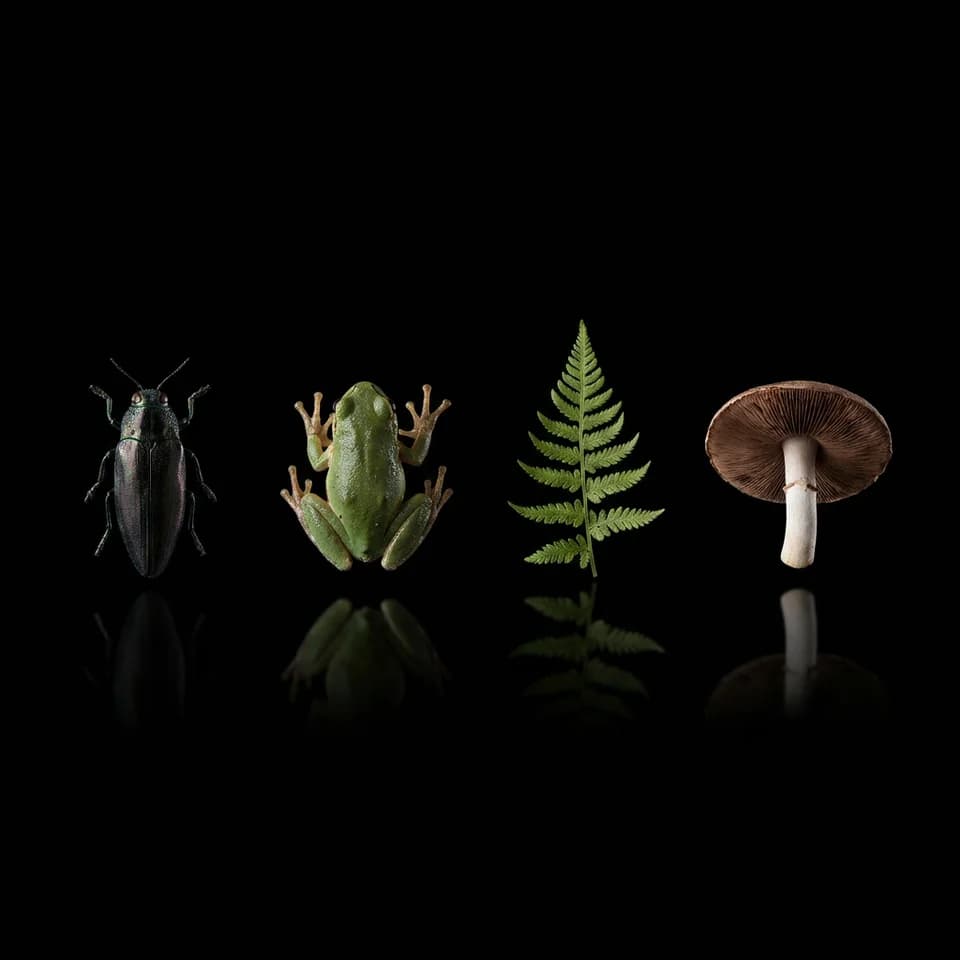
Group by features you can see, name in two parts, sort with yes/no keys.
Learn it
Classify organisms by structural features, use binomial names and construct dichotomous keys
Idea 1 of 4
Is it alive?
Living things carry out all seven life processes — MRS GREN: Movement, Respiration, Sensitivity, Growth, Reproduction, Excretion, Nutrition — and are made of cells. A flame grows and moves, but it isn't alive.
Know it by heart
Say each one in your head, then tap to check.
Try it
Play — nothing here is marked
Vertebrates of a river red gum forest · Murray River, NSW. Pick an organism, start at step 1, and follow the key.
The full key, as it would be printed in the exam
- 1aBody covered in feathers …… Laughing kookaburra1bBody not covered in feathers …… go to 2
- 2aBody covered in fur …… go to 32bBody not covered in fur …… go to 4
- 3aHas a duck-like bill and lays eggs …… Platypus3bGives birth to live young carried in a pouch …… Red kangaroo
- 4aSkin is dry and scaly …… Blue-tongue lizard4bSkin is moist, or body has fins …… go to 5
- 5aHas fins and lives in water all its life …… Murray cod5bHas legs and moist skin …… Green tree frog
A full-marks answer
A student's key splits animals by 'big' and 'small'. Explain why this is a poor feature and suggest a better one.
2 marksBuilt one line at a time — say the next line before you reveal it
- Size varies between individuals and with age, and 'big' is a matter of opinion, so two people could go different ways.(why it fails — not observable and fixed)
Words to know
Tap a card to flip it
Step 14 · last bit
Ready? Prove it.
A round of ten. Score 8 or more and this step is done — then on to the particle model.